
TL;DR
In short
- Mortgage underwriting is the lender’s assessment of the risks of lending to you; a positive outcome usually leads to a formal mortgage offer.
- The lender checks your identity, your credit report and whether you can afford the repayments, and arranges a valuation to check that the property is suitable security for the loan.
- Every mortgage application is assessed by the lender. Some lenders automate parts of the assessment, and more complex applications may be reviewed by an underwriter, who may ask for more information or documents.
- There is no fixed timescale for underwriting: it depends on the lender and its workload, how complex your circumstances are, how quickly you provide documents and when the valuation is carried out.
- Applications can be declined at the underwriting stage, even after an Agreement in Principle. If yours is, find out why, correct any errors and get advice before applying again.
You’ve found your dream home, received an Agreement in Principle and applied for a mortgage - and you’ve heard from your adviser at Extend Finance that it is now time for mortgage underwriting. The underwriter’s decision will determine whether the lender makes you a mortgage offer. This article explains what underwriting involves and what lenders’ underwriters actually do.
What is mortgage underwriting?
Mortgage underwriting is the process of analysing the risks involved in providing a mortgage to a particular person in order to determine whether the lender should lend to that person. It is on the basis of the outcome of this assessment that you will receive a positive or negative decision. A number of factors are taken into account, such as your age, financial situation, the property you have chosen as well as your previous history of commitments.

Underwriting is a much fuller assessment than an Agreement in Principle. An Agreement in Principle is only an indication of how much a lender may be prepared to lend, whereas a positive underwriting outcome usually leads to a formal mortgage offer.
How does underwriting work?
The underwriting process is broadly similar across UK lenders, but there may be differences between them, for example in the time taken to process an application or the period over which income is analysed.
Gathering of documents
The first step is usually the same - your mortgage adviser or the lender will collect all the necessary documents, including:
-
Your payslips or tax returns so that your income can be determined;
-
Your account statements, from which your household expenses will be estimated;
-
Old electricity bills or your tenancy agreement, to trace your residence history;
-
Loan or mortgage agreements, if any, to estimate your recurring expenses.
Assessment of your financial situation
The mortgage underwriter will check your identity, analyse your credit report and, most importantly, accurately calculate your affordability. Your credit report comes from credit reference agencies – the three main ones in the UK are Equifax, Experian and TransUnion – and the lender uses this information, together with its own criteria, to decide whether to lend. The stability of your living situation, both professionally and personally, is also assessed.

The underwriter assesses whether you can afford the repayments and how likely you are to fall behind on them – the lower that risk, the better. If the mortgage term would run beyond your expected retirement date (or State Pension age), the lender must also take a prudent approach to assessing your income after that date, which may limit the term or the amount it is prepared to lend.
Property valuation and legal checks
The lender also arranges a valuation to check that the property is suitable security for the loan. Depending on its criteria, a lender may decline or reduce lending on a property it considers higher risk, for example one with significant structural problems or of non-standard construction. Separately, your conveyancer carries out the legal checks on the property, such as title and local searches, for you and usually also for the lender.
If everything goes your way, the lender will let you know the positive outcome of the underwriting.
Does a mortgage application always involve underwriting?
Every mortgage application is assessed by the lender before a mortgage offer is made. Some lenders automate parts of this assessment, such as credit scoring, and applications that fall outside their automated rules or involve more complex circumstances may be reviewed by an underwriter, who may ask you for more information or documents.

How long does it take for a mortgage decision to be made in the UK?
There is no fixed timescale for underwriting. How long it takes depends on the lender and its workload, how complex your circumstances are, how quickly you provide any documents requested and when the valuation is carried out. Straightforward applications are often decided more quickly, while complex cases or requests for extra documents can add time.
What if my mortgage application is rejected?
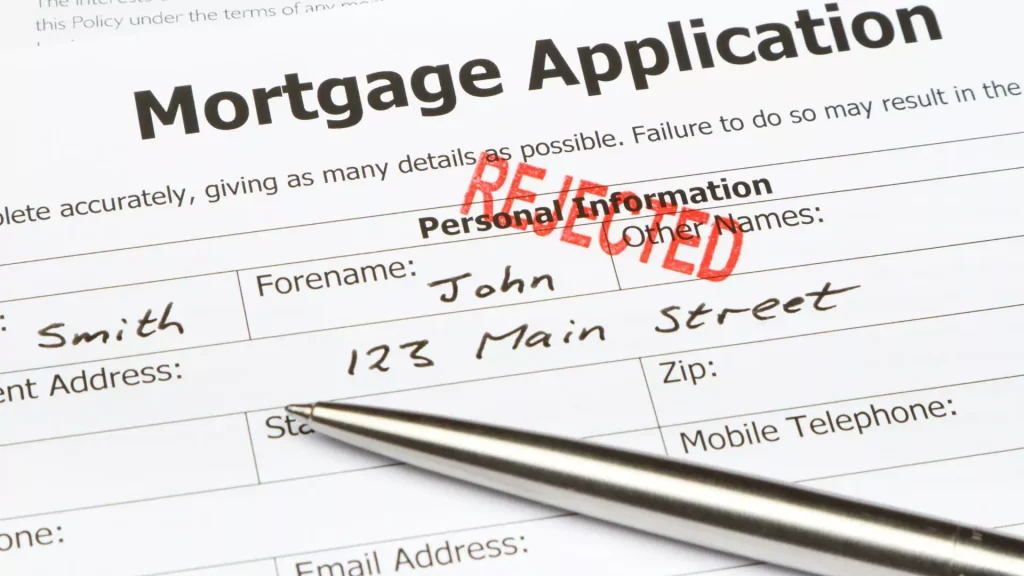
Mortgage applications can be declined at the underwriting stage, even if you have already received an Agreement in Principle. Refusals can involve insufficient earnings or irregularities in the repayment of past debts. Applications can also be delayed or declined because of missing, incorrect or inconsistent documents.
We can review your circumstances and documents, compare suitable lenders and help you prepare an application. Approval remains subject to the lender’s criteria and assessment.
If you have applied for a mortgage and have been refused, the situation is not as bad as you might think. For this reason, it’s worth taking the necessary steps quickly and implementing a contingency plan as soon as possible. Here is what it might look like:
-
Contact us and describe the whole situation - your assigned mortgage advisor will review your documents and assess the reason behind the rejection;
-
Compare suitable lenders and products, taking account of their affordability criteria, costs and your circumstances.
-
Review your credit report with us - together we will see if there are elements you can still work on to improve your image in the eyes of the banks;
-
Apply for a mortgage again - you will do so with much more peace of mind knowing that you have done everything you can to finally realise the dream of owning your own home.
What can be done to increase the chances of a positive underwriting outcome?
Above all, don’t treat the lender as your adversary - lending is how it makes money, so it also wants to approve suitable applications.
It may be the case that the lender’s underwriter contacts you to clarify issues of concern - if your credit report shows that your current financial situation is materially better than it was just a few months ago, the underwriter’s assessment may speak in your favour. Do not overstate your income, understate your expenses or misrepresent your credit history: lenders check the information you give, and knowingly giving false information on a mortgage application can amount to fraud.
Finally, consider getting mortgage advice. An adviser can compare deals across lenders and help you prepare your application. If an adviser charges a fee, ask about it at the outset and weigh it against the overall cost of the mortgage.
FAQ
Frequently asked questions
What is mortgage underwriting?
Mortgage underwriting is the process of analysing the risks involved in providing a mortgage to a particular person in order to determine whether the lender should lend to that person.
How does underwriting work?
Your documents, such as payslips or tax returns, bank statements and details of existing loans, are collected first. The underwriter then checks your identity and credit report and assesses whether you can afford the repayments, and the lender arranges a valuation to check that the property is suitable security for the loan. A positive underwriting outcome usually leads to a formal mortgage offer.
Does a mortgage application always involve underwriting?
Every mortgage application is assessed by the lender before a mortgage offer is made. Some lenders automate parts of this assessment, such as credit scoring, and applications that fall outside their automated rules or involve more complex circumstances may be reviewed by an underwriter, who may ask you for more information or documents.
How long does it take for a mortgage decision to be made in the UK?
There is no fixed timescale for underwriting. How long it takes depends on the lender and its workload, how complex your circumstances are, how quickly you provide any documents requested and when the valuation is carried out. Straightforward applications are often decided more quickly, while complex cases or requests for extra documents can add time.
What if my mortgage application is rejected?
Mortgage applications can be declined at the underwriting stage, even if you have already received an Agreement in Principle. If yours is refused, find out the reason, check your documents and credit report and correct any errors, and avoid immediately applying to another lender without advice. Getting mortgage advice can help you decide when and where to apply again.