
TL;DR
In short
- First time buyer (FTB) is the official term for a person who has never owned any share in a property, either in the UK or anywhere else in the world.
- Shared Ownership In Northern Ireland, there are schemes that are equivalent to Shared Ownership in England .
- Shared Ownership In Wales, Shared Ownership operates on very similar principles to those in England .
- Shared Ownership Scotland also has a shared ownership scheme, which differs from others in a few key ways.
- As can be seen, there are fewer support schemes in the other parts of the UK than in England; however, this is clearly justified by property prices — in Scotland, Wales and Northern Ireland, these are much lower, meaning fewer people str…
Although all of these countries form part of the United Kingdom, the rules governing the purchase of property often differ between them. Due to differing regulations, property prices and the needs of residents, each of these nations offers various support schemes designed to help those wishing to buy their own home. In this article, we will discuss all the support schemes currently in place in Wales, Scotland and Northern Ireland. However, we will omit England — there are by far the most schemes there, and we cover them in a separate article.
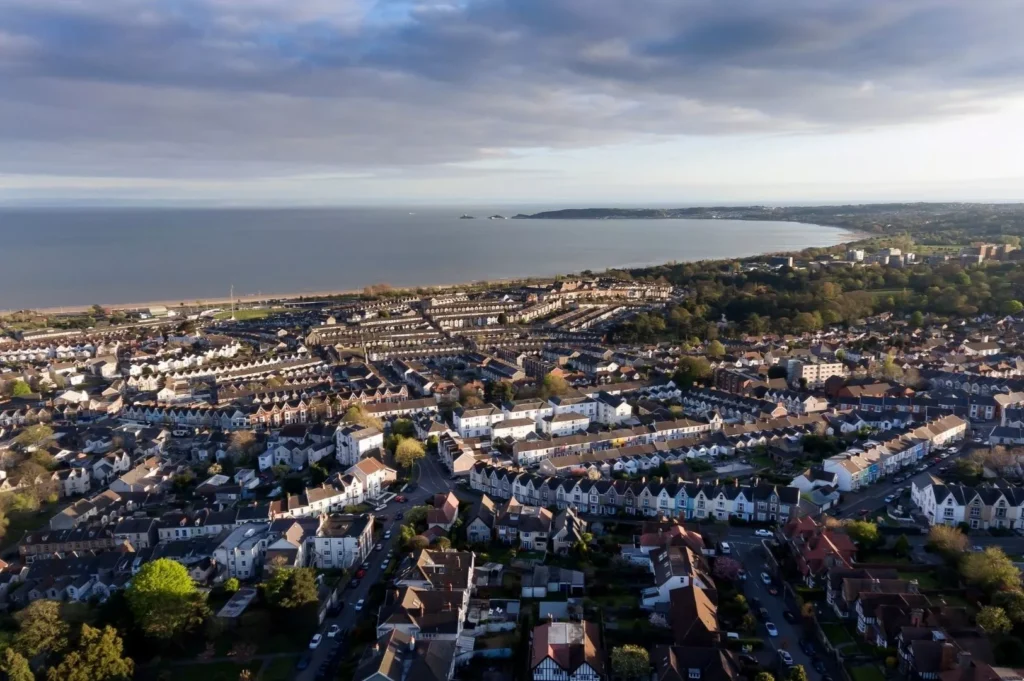
First-time buyers (FTB) in different parts of the UK
First-time buyer (FTB) is the official term for a person who has never owned any share in a property, either in the UK or anywhere else in the world. In England, First Time Buyer status brings enormous benefits, and those who hold it can expect numerous tax reliefs, opportunities to participate in schemes and discounts. This status also exists in each of the other countries of the UK, but it does not always have practical application:
Property purchase tax
In Northern Ireland, exactly the same property purchase tax applies as in England, namely Stamp Duty Land Tax (SDLT). First-time buyers do not have to pay any tax on properties up to £300,000. Given the average property price in Northern Ireland, which stands at £193,247, this relief allows the SDLT to be avoided entirely in the vast majority of transactions.
Scotland is another country where, as in England and Northern Ireland, First-Time Buyer status entitles the buyer to a tax relief. The Land and Buildings Transaction Tax (LBTT), the Scottish equivalent of the English Stamp Duty, is 0% for first-time buyers up to £175,000. For more expensive properties, the tax is calculated at standard rates.
In Wales, there is no separate tax relief for first-time buyers, and they must pay Land Transaction Tax in the same way as other residents. However, this is not a major issue, as the tax rates are very low — you only start paying it on the portion of the property value above £225,000. Given that the average property price in Wales is £236,000, most transactions will either be exempt from tax altogether or will only be subject to the lowest rate of 6%, applied only to the portion exceeding £225,000.

Lifetime ISA
It is also worth remembering that the Lifetime Individual Savings Account (Lifetime ISA, LISA) is available throughout the UK. This is particularly important for first-time buyers, as only they can use funds from this account to purchase a property. If you do not have First-Time Buyer status, you must wait until you reach retirement age to withdraw the funds.
So what makes this account special? Its biggest advantage is the government bonus – extra money that the government adds to your savings from its own funds. Every time you make a deposit into your LISA account, you will receive an additional 25% of the deposit amount. For example, if you deposit £400, the bonus will be £100. The maximum annual deposit limit is £4,000, so you can receive up to £1,000 in bonuses from the government each year.
Lower mortgage interest rates
In addition, as in England, first-time buyers can often count on better mortgage interest rates. This is not a hard and fast rule, but banks’ offers very often include preferential terms specifically aimed at those with First Time Buyer status.

Support schemes in Northern Ireland
Shared Ownership
In Northern Ireland, there are schemes that are equivalent to Shared Ownership in England. Taking advantage of such a support scheme involves purchasing a certain share (at least 50%) of the property and paying rent on the remainder, which is financed by the scheme provider.
For example, let’s say you buy a 60% share in the property, and the scheme provider pays for the remaining 40%. Of course, this does not mean that someone will be moving in with you — the house is entirely yours in the sense that you will be its sole occupier. Under the shared ownership agreement, however, you will have two fixed expenses. These are:
-
Mortgage repayments;
-
Rent paid to the scheme provider, who paid for the remainder of the property.
This rent is not calculated strictly in proportion to the part of the property you do not own – in practice, it is often lower than would be expected based on the percentage share alone.
In Northern Ireland, there are two main providers of shared ownership schemes:
-
Co-ownership – a government-backed non-profit organisation that focuses exclusively on helping people buy property. Since its inception, it has helped 34,000 people buy a home and currently has agreements in place with as many as 10,500 co-owners;
-
FairShare – a smaller, private organisation that focuses on newly built properties. The way the scheme works is very similar, although the terms may be slightly more market-oriented.
These schemes assume from the outset that you will finance your share with a mortgage, as one of the eligibility criteria for such a scheme is confirmation that your financial situation does not allow you to purchase 100% of the property.
Another condition is that you must not own any other properties, either in the UK or abroad. However, this does not mean that the scheme is aimed exclusively at first-time buyers — even if you have previously owned another property, you can still benefit from it.
After purchasing the property under the scheme, you can gradually pay off the remaining share. This mechanism is known as staircasing and involves transferring sums to the owner of the other half of the property, which simultaneously increases your share in the property and reduces your monthly rent.

Co-Own for Over 55s
The Co-ownership organisation offers an additional co-ownership scheme designed for people aged 55 and over. The aim of this scheme is to help middle-aged and older people purchase their next home, one that is better suited to their needs.
For example, when an older person is left alone in a large house that they no longer have the strength to look after, they can take advantage of the Co-Own for Over 55s scheme and move to a smaller home that better suits their needs.
In this case, there is no need to take out a mortgage for seniors, and part of the property can be paid for using the proceeds from the sale of the previous home. As with any other Shared Ownership scheme, rent must be paid on the remaining portion of the property.
House Sales Scheme
The House Sales Scheme is a programme that enables social housing tenants to purchase their home at a significant discount. The size of this discount depends on the length of the tenant’s tenancy:
With the discount, it’s 5 — in which case the discount amounts to 20% of the property’s market value. For each subsequent year of residence, the discount increases by 2% until it reaches 60% or £24,000, which is the maximum possible amount.
The terms of the scheme include several circumstances in which you cannot benefit from the scheme. You are not eligible if:
-
you live in a special flat adapted for people with special needs;
-
you live in accommodation that is part of a wider complex of social housing flats;
-
you are a squatter;
-
the Housing Executive wishes to repossess the property.
The House Sales Scheme is the equivalent of the English Right to Buy scheme.

Housing schemes in Wales
Shared Ownership
In Wales, Shared Ownership operates on very similar principles to those in England. As a shared ownership scheme, it allows you to purchase a share of a property and pay rent on the other share, which belongs to a Housing Association. This means you can move into the property with a minimal or even zero deposit (some lenders offer products with 100% LTV).
For example, suppose you want to live in a property worth £100,000. You finance 60% of the property with a mortgage, and pay monthly rent on the remaining 40%.
Whilst living in the property, you can gradually buy out the remaining shares through a mechanism known as staircasing.
To be eligible for the scheme, you must:
-
finance a chosen portion of the property (between 25% and 75%) with a mortgage;
-
have a household income of no more than £60,000 per year;
-
demonstrate that you cannot afford to buy a suitable home outright;
-
not own any other property;
-
be financially stable enough to pay both the mortgage repayment and the rent.
In addition, the Welsh Government is very keen to ensure that Shared Ownership is only available to those most in need. Hence the additional criteria, according to which, to qualify, you must meet one of the following requirements:
-
be a First-Time Buyer;
-
be forming a new household (for example, following a divorce);
-
be moving to an area where property prices are so high that you cannot afford to buy a suitable home for your family.

Help to Buy – Wales
Help to Buy is a very interesting support scheme available in Wales, which operates on the basis of capital loans from the government. The way it works is very simple — when you buy a home, the government finances up to 20% of the purchase price. This allows you to buy a property with a smaller mortgage and a smaller deposit.
This loan is interest-free for the first 5 years. After this period, interest begins to accrue at an initial rate of 1.75% per annum. With each subsequent year, the interest rate is calculated as the Retail Prices Index (RPI, i.e. the UK inflation rate) + 1%.
Those using the scheme are required to repay the mortgage 25 years after purchase or upon the sale of the property. Of course, if you wish to repay it earlier and avoid interest, you are certainly free to do so.
You can use the scheme if:
-
you are able to make a 5% deposit;
-
you are buying a newly built home costing no more than £300,000;
-
you are financing the purchase with a mortgage.
In addition to Help to Buy, there is also a very similar scheme in Wales called Homebuy, which allows you to obtain a loan covering as much as 30% to 50% of the property value. However, it is only available in a few areas, and its terms vary depending on the location.

Housing schemes in Scotland
Shared Ownership
Scotland also has a shared ownership scheme, which differs from others in a few key ways. Firstly, there are no strict eligibility criteria — the scheme is open to anyone who cannot afford to buy a home outright. In addition, priority may be given to:
-
first-time buyers (FTBs);
-
war veterans;
-
members of the special forces or the armed forces;
-
family members of those who died whilst serving in the armed forces;
-
local authority workers;
-
people with disabilities;
-
low-income families.
LIFT – Low-cost Initiative for First-time Buyers
The main scheme supporting home purchases in Scotland is the Low-cost Initiative for First Time Buyers, known as LIFT. It involves the government financing part of the purchase, allowing the buyer to make a smaller deposit and take out a smaller mortgage. Additionally, because part of the property’s value is purchased by the government, the mortgage has a much lower Loan-to-Value ratio.
LIFT operates on a shared equity basis. This means that the share purchased by the government formally belongs to the state, so when the property is sold, the state will receive a proportionate share of the proceeds. If you wish, there is nothing to prevent you from repaying the government’s share early.

The LIFT scheme is divided into two types:
Open Market Shared Equity (OMSE) – designed for properties from across the market, including the secondary market;
New Supply Shared Equity (NSSE) – focused on properties newly built by the council or a housing association.
Both types operate in very similar ways and differ only in the details. If you wish to take advantage of the scheme, you have two options — either you sign up straight away and choose a home from the available pool (NSSE), or you find a property on the secondary market and only then apply for support (OMSE). In both cases, you can count on government assistance of between 10% and 40% of the property price.
To be eligible for the scheme, you must fall into one of the following categories:
-
First-time buyers (FTB);
-
war veterans;
-
members of the special services or the armed forces;
-
family members of those who died whilst serving in the armed forces;
-
people over the age of 60;
-
people living in social housing;
-
people with disabilities,
and the value of the property must not exceed a specific amount set by the government.
Summary
As can be seen, there are fewer support schemes in the other parts of the UK than in England; however, this is clearly justified by property prices — in Scotland, Wales and Northern Ireland, these are much lower, meaning fewer people struggle to buy a home. In each of these regions, you can access a shared ownership scheme such as Shared Ownership, as well as other unique schemes:
-
in Northern Ireland, the House Sales Scheme;
-
in Wales, Help to Buy;
-
in Scotland, the Low-cost Initiative for First-time Buyers.
If you are planning to buy a home in Scotland, Wales, England or Ireland within the next year, please** contact us to arrange a free, no-obligation mortgage consultation**. We will be happy to answer all your questions.
FAQ
Frequently asked questions
First-time buyers (FTB) in different parts of the UK?
First time buyer (FTB) is the official term for a person who has never owned any share in a property, either in the UK or anywhere else in the world.
Support schemes in Northern Ireland?
Shared Ownership In Northern Ireland, there are schemes that are equivalent to Shared Ownership in England .
Housing schemes in Wales?
Shared Ownership In Wales, Shared Ownership operates on very similar principles to those in England .
Housing schemes in Scotland?
Shared Ownership Scotland also has a shared ownership scheme, which differs from others in a few key ways.
Summary?
As can be seen, there are fewer support schemes in the other parts of the UK than in England; however, this is clearly justified by property prices — in Scotland, Wales and Northern Ireland, these are much lower, meaning fewer people struggle to buy a home.