TL;DR
In short
- If an entry on your Checkmyfile report is inaccurate, identify the data supplier and credit reference agency (CRA), keep supporting evidence and ask them to investigate it.
- A dispute corrects inaccurate information. A notice of correction is a separate, short explanation that does not change the underlying record or guarantee a lending outcome.
- Checkmyfile combines information from multiple CRAs, but lenders may use different data and make their own affordability and lending assessments.
- Payment markers describe reported account status. Their effect depends on the entry and the lender, so no marker gives a universal prediction of your score or application result.
- You can obtain statutory credit reports from the main CRAs free of charge; a paid multi-agency service is not required to challenge inaccurate data.
If you find an error on a Checkmyfile credit report, act on the entry itself rather than focusing only on the score. Checkmyfile brings together data from Experian, Equifax and TransUnion, but not every lender reports to every CRA. That means the information a lender sees, and its own assessment of an application, may differ from a consumer-facing score.
Start by identifying the account, the reported status and the organisation that supplied the data. Keep copies of statements, payment confirmations or correspondence that support your position. You can then ask the data supplier and the relevant CRA to investigate the accuracy of the entry. Checkmyfile account holders may also be able to ask for help raising a CRA dispute, but the supplier still has to agree that a change is appropriate.

How to correct an error on a Checkmyfile credit report
Be specific when you raise a dispute: say which account and entry you believe is wrong, explain why, and attach relevant evidence. Contact the data supplier as well as the CRA showing the entry. Once the investigation is complete, check your report again to make sure the result has been reflected correctly.
If you remain concerned that personal data is inaccurate after you have followed the organisation’s complaints process, you may be able to raise a data-accuracy complaint with the Information Commissioner’s Office. The ICO does not decide the underlying financial dispute, and it cannot promise that an accurate adverse entry will be removed.
If you suspect fraud or identity theft, contact the lender or provider’s fraud team and the relevant CRA promptly. Do not rely on an explanatory note as a substitute for reporting suspected fraud.
You do not need a paid subscription to dispute data. Statutory reports from the main CRAs are available free of charge. A multi-agency service can be useful for comparing information from different CRAs, but it is optional.
Selected payment markers on a Checkmyfile report
The following are selected markers you may see on a Checkmyfile report. They describe information reported about an account; they are not a universal ranking of credit risk or a prediction of a lender’s decision.
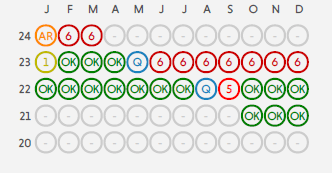
- OK usually means the payment was reported as made on time.
- 1 to 6 indicate reported late or missed payments and increasing arrears markers.
- S means an account is settled or closed, while SF means a default has been satisfied.
- PS indicates an agreed partial settlement.
- D indicates a default. An accurate default normally remains on a credit report for six years from its default date, whether it is paid or unpaid. Paying it later does not restart that six-year period, but it does not by itself remove the default either.
- AR indicates an alternative payment arrangement.
- U means the status is unknown, often because an account is new or has not been reported. IN means inactive and NR means there has been no update.
- DA can refer to an assignment to a third party or an arrangement with the original lender.
- Q identifies a lender query, usually connected with a dispute.
- VT identifies voluntary termination. This applies in the relevant hire-purchase or PCP context and is subject to the agreement and any payment or return obligations; ending a personal contract hire lease is a different contractual process.
For the provider’s own definitions, see Checkmyfile’s payment-marker guide. A settled ordinary account and a default have different retention periods. A settled account may remain on a report for six years from settlement or closure, while an accurate default is retained for six years from the default date. Removal from a credit report is not the same as deletion from every database.

Does closing an account affect your credit score?
Closing a credit card or another credit account can change the information used in a consumer score, for example by changing your available credit or utilisation. The effect depends on your circumstances and on the scoring system. It does not by itself tell you how a particular lender will assess an application.
Lenders do not use one universal score. They consider their own criteria, the information in an application and credit-report data, alongside affordability where relevant. If you are planning a major application, such as a mortgage, avoid assuming that a score movement alone determines the outcome. Our credit-score guide explains the wider factors to consider.

When to use a notice of correction
A notice of correction is not the same as a dispute. Use a dispute where information is inaccurate. A notice of correction is a short statement that can explain circumstances around an accurate entry when you believe that context may help a lender understand it.
For example, Experian allows a notice of up to 200 words, subject to suitability requirements, and may suggest changes to the wording. You may need to contact other relevant CRAs separately. A notice does not change the underlying information or Experian score, and it does not guarantee approval. It can also mean an application needs manual consideration and takes longer. Read Experian’s notice of correction guidance before deciding whether it is appropriate.
FAQ
Frequently asked questions
How do I correct an error on my Checkmyfile credit report?
Identify the account and the entry you believe is wrong, collect supporting evidence, and contact both the data supplier and the relevant credit reference agency. Checkmyfile may help account holders raise a CRA dispute, but it cannot guarantee that the supplier will change an accurate record. Check the report again after the investigation. If a data-accuracy issue remains unresolved after the organisation’s complaints process, you may be able to complain to the ICO.
What do the payment markers on a Checkmyfile report mean?
Payment markers describe the status reported for an account. For example, OK usually means a payment was made on time; 1 to 6 indicate reported late or missed payments and increasing arrears markers; S means settled or closed; SF means a satisfied default; D means default; and AR indicates an alternative payment arrangement. Their effect is not universal: lenders use their own criteria and assessment.
Will a default disappear when I repay it?
Paying an accurate default does not normally remove it immediately from a credit report. It usually remains for six years from the default date whether paid or unpaid, although its status can show that it has been satisfied. This is different from an ordinary closed account, which may remain for six years from settlement or closure.
Does closing a credit card affect my chances of getting credit?
Closing a card can change available credit or utilisation, so it can affect a consumer score in some circumstances. It does not provide a reliable prediction of a lender’s decision. Lenders use their own assessment, credit-report information, application details and affordability criteria where relevant.
When should I use a notice of correction?
Use a dispute when an entry is inaccurate. A notice of correction is a separate short explanation for an accurate entry where context may be useful. It does not alter the entry or guarantee approval, and it may slow an application because manual consideration can be needed. Contact each relevant CRA to understand its process.