TL;DR
Second charge mortgage - key points
A second charge mortgage is a separate loan secured on your property from a different lender, while your existing mortgage stays in place. If the home is sold, the first mortgage is repaid first.
It is usually considered when remortgaging would mean a large early repayment charge or giving up a good fixed rate, when your lender has declined a further advance, or when your main lender will not lend for the purpose you need.
Rates are usually higher than on a main mortgage and a longer term increases the total interest. Your home may be repossessed if you do not keep up repayments.
Second charge mortgages on your own home are regulated by the FCA: the lender checks affordability, gives you an ESIS illustration and at least seven days to consider a binding offer. Loans for business purposes or on buy-to-let property may not be regulated.
Before arranging a second charge, an adviser should tell you that a further advance, a remortgage or unsecured borrowing may be available and more suitable.
How does a second charge mortgage work?
A second charge mortgage is a loan from a second lender, secured on a property that already has a mortgage. You keep your existing mortgage and its rate and make two separate monthly payments.
Your main lender keeps first claim on the property. If it is sold or repossessed, the first mortgage is repaid first and the second charge from what is left; if that is not enough, the second lender can still ask you to repay the shortfall (MoneyHelper, Shelter). The amount you can borrow depends mainly on your equity (the value of your home minus what you owe), your income and outgoings and the lender's own limits.
Second charge mortgages on your own home have been regulated by the FCA under largely the same rules as main mortgages since 21 March 2016. You will see them called second mortgages, secured loans or homeowner loans. For a fuller explanation of the terms, read our guide What is a second charge mortgage?.
Property value £300,000
Additional funds £40,000
Current situation
Your existing mortgage and the equity in your home.
- Your Equity
- £150,000
- Current Mortgagee.g. HSBC
- £150,000
Total borrowing: £150,000
LTV: 50%
One existing mortgage
Second Charge
Keep your existing mortgage and take a separate additional loan.
- Remaining Equity
- £110,000
- Second Charge Mortgage
- + £40,000
- Current Mortgagee.g. HSBC
- £150,000
Total borrowing: £190,000
Combined LTV: 63.3%
Two separate mortgages
Remortgage
Replace your existing mortgage with one new, larger mortgage.
- Remaining Equity
- £110,000
- New Mortgagee.g. Barclays
- £190,000
Total borrowing: £190,000
LTV: 63.3%
One replacement mortgage
The existing HSBC mortgage stays on its current terms, subject to its normal contractual conditions, including the end of its fixed rate.
Equity is your home’s value minus the borrowing secured against it. LTV is borrowing as a percentage of the property value; combined LTV includes both mortgages.
Illustrative example only. Fees and interest are not included. The lender names are examples, not product recommendations. Equity does not automatically mean the full amount is available to borrow.
The property value is unchanged. Fees are not added to the loan; availability remains subject to individual affordability and lender criteria.
The coloured rectangle represents 100% of the home’s value. The grey roof is decorative.
When does a second charge mortgage make sense?
A second charge makes sense when you need to raise money against your home but changing your main mortgage would cost more, or your main lender will not help.
These are situations we see in practice:
Extension while on a good fixed rate
You need, say, £70,000 for an extension, but leaving your fixed rate would trigger an early repayment charge. A second charge raises the money and your main mortgage stays on its current deal.
A short loan until your fixed rate ends
The second charge can be taken for a short term, for example two years. When your fixed rate ends, both loans can be combined into one ordinary remortgage, if you qualify at that point.
Your lender declined a further advance
Rather than leave your fixed rate and pay an early repayment charge, you borrow the extra amount from a second charge lender, which may assess the application differently.
A deposit for another property
You want to buy a second home or a buy-to-let while your main mortgage is fixed with an early repayment charge. A second charge can release equity without breaking your current deal.
Business purposes
Few main mortgage lenders accept raising money for a business, and those that do have tight restrictions. Some second charge lenders consider it. These loans may not be regulated by the FCA.
Consolidating debts, with care
High-street lenders apply fairly strict affordability and loan-to-value limits, and second charge lenders can be more flexible. If you consolidate, the lender usually requires the named debts to be repaid soon after completion, often within about two weeks, and checks this. Unsecured debt becomes secured on your home, so we treat this as a last option. See our debt consolidation page.
Buying out another owner’s share
Additional borrowing may be one option for buying out a co-owner’s share, if the lender accepts the purpose. A Second Charge does not itself remove anyone from the existing mortgage. Lender consents, affordability assessment, ownership changes and appropriate legal work may be needed.
Whether a second charge suits you depends on your circumstances. The same need can sometimes be met more cheaply with a further advance or a remortgage, so we compare them using your actual figures.
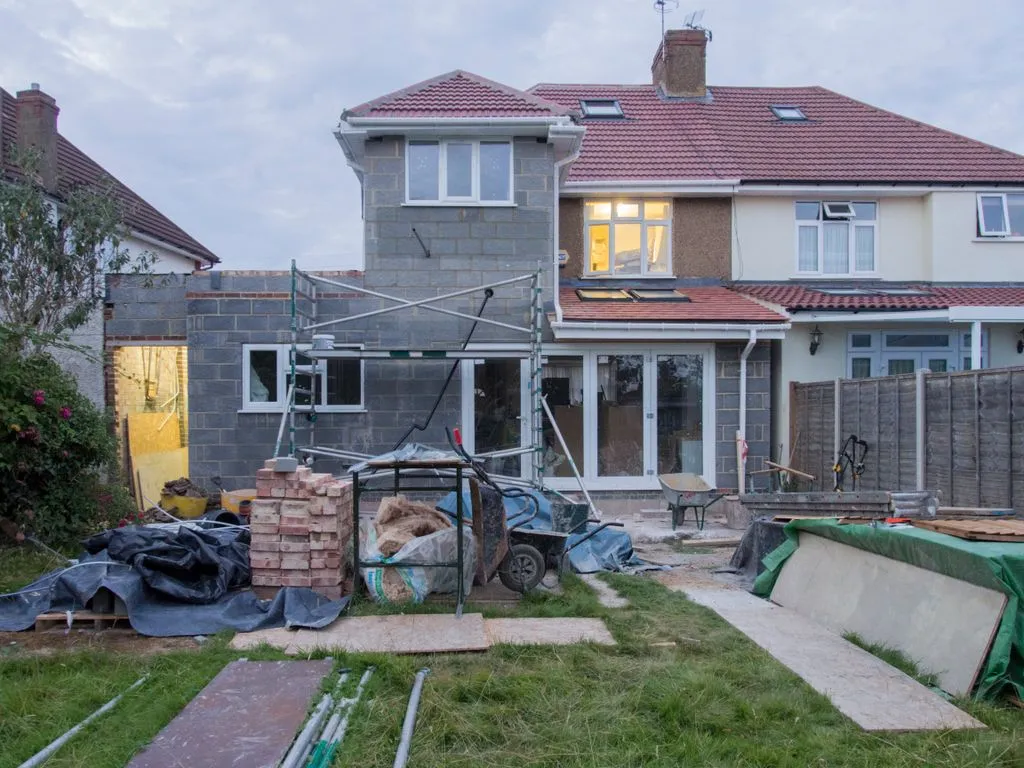
Funding an extension without leaving a good fixed rate is a common reason for a second charge.
When might another option be better?
A second charge is not the right choice if a cheaper or lower-risk option meets the same need.
- You can get a further advance on good terms. If you are up to date with payments, extra borrowing from your existing lender is often cheaper.
- You have no large early repayment charge. If your deal is ending, you have equity and your circumstances have not changed, a remortgage may give you one loan at a lower rate.
- You only need a small amount. An unsecured personal loan, or a 0% balance transfer card for card debt, does not put your home at risk (MoneyHelper on consolidation loans).
- You are already struggling with payments. An arrangement with your creditors may be safer than secured borrowing. Free, confidential help is available through the MoneyHelper debt advice locator.
- You have a Help to Buy equity loan. Borrowing more against a Help to Buy (England) home needs Homes England's permission and is allowed only for limited purposes (GOV.UK). See our Help to Buy page.
- You are planning to sell soon. A second charge normally has to be repaid when you sell, and early repayment charges may apply.
Second Charge vs Remortgage – what’s the difference?
What does the borrowing actually cost over 24 months?
Two hypothetical examples show why it helps to compare the cost of the whole borrowing, not only the interest rate on the extra £40,000.
The following financial examples are for illustrative purposes only and are based on hypothetical assumptions. They do not constitute a mortgage offer or guarantee any particular interest rate or savings. We assess each customer's circumstances individually, taking into account factors such as age, income, financial commitments, existing mortgage balance and interest rate, property value, credit history, available products and lender criteria.
Shared assumptions for both examples
- Home value
- £300,000
- Extra funds received
- £40,000
- Opening debt
- £190,000
- Comparison period
- 24 months
Capital-and-interest repayment. Every loan has a remaining or new term of 25 years; the existing mortgage term is not extended. No overpayments. Fees and early repayment charges are paid separately in cash, not taken from the £40,000 or added to the loans. You therefore need a separate budget for the upfront costs.
A. Keeping a low fixed rate
The existing 2% rate has two years left. Replacing the whole mortgage now triggers a hypothetical early repayment charge (ERC): 3% × £150,000 = £4,500.
Interest + fees + early repayment charge. Repaying capital is not a financing cost.
On these assumptions, the Second Charge route costs £8,595.38 less. The higher 8% applies only to £40,000; £150,000 keeps its 2% rate and does not trigger an ERC.
Show detailed calculations and assumptions
Both routes provide £40,000 net and start with £190,000 of borrowing. The new remortgage rate applies to the whole £190,000, not just the extra £40,000.
Existing mortgage + Second Charge
- Total payments over 24 months
- £22,668.24
- Capital repaid
- £10,529.20
- Interest
- £12,139.04
- ERC
- £0.00
- Fees
- £2,000.00
- Financing cost over 24 months
- £14,139.04
- Total cash outflow: payments + fees + ERC
- £24,668.24
- Debt remaining after 24 months
- £179,470.80
One replacement remortgage
- Total payments over 24 months
- £25,345.92
- Capital repaid
- £8,611.50
- Interest
- £16,734.42
- ERC
- £4,500.00
- Fees
- £1,500.00
- Financing cost over 24 months
- £22,734.42
- Total cash outflow: payments + fees + ERC
- £31,345.92
- Debt remaining after 24 months
- £181,388.50
Hypothetical fees paid in cash
Existing mortgage + Second Charge
- Lender fee: £500.00
- Broker fee: £1,000.00
- Valuation and legal costs: £500.00
One replacement remortgage
- Lender fee: £500.00
- Broker fee: £500.00
- Valuation and legal costs: £500.00
These fee amounts are model assumptions only. They are not Extend Finance’s tariff or a lender quotation. Actual costs are confirmed individually in writing.
B. The existing fixed rate ends
After the fix ends, assume a variable rate of 6.5% on the existing mortgage and no ERC. It stays constant for this 24-month calculation; the actual rate could change.
Interest + fees + early repayment charge. Repaying capital is not a financing cost.
On these assumptions, the remortgage route costs £9,272.56 less. The new 4.5% rate applies to the whole £190,000 and replacing the loan does not trigger an ERC.
Show detailed calculations and assumptions
Both routes provide £40,000 net and start with £190,000 of borrowing. The new remortgage rate applies to the whole £190,000, not just the extra £40,000.
Existing mortgage + Second Charge
- Total payments over 24 months
- £31,716.96
- Capital repaid
- £6,209.98
- Interest
- £25,506.98
- ERC
- £0.00
- Fees
- £2,000.00
- Financing cost over 24 months
- £27,506.98
- Total cash outflow: payments + fees + ERC
- £33,716.96
- Debt remaining after 24 months
- £183,790.02
One replacement remortgage
- Total payments over 24 months
- £25,345.92
- Capital repaid
- £8,611.50
- Interest
- £16,734.42
- ERC
- £0.00
- Fees
- £1,500.00
- Financing cost over 24 months
- £18,234.42
- Total cash outflow: payments + fees + ERC
- £26,845.92
- Debt remaining after 24 months
- £181,388.50
Hypothetical fees paid in cash
Existing mortgage + Second Charge
- Lender fee: £500.00
- Broker fee: £1,000.00
- Valuation and legal costs: £500.00
One replacement remortgage
- Lender fee: £500.00
- Broker fee: £500.00
- Valuation and legal costs: £500.00
These fee amounts are model assumptions only. They are not Extend Finance’s tariff or a lender quotation. Actual costs are confirmed individually in writing.
The repayment formula is M = P × r ÷ (1 − (1 + r)⁻ⁿ), where P is the balance, r is the annual nominal rate divided by 12, and n = 300 payments. Each loan payment is rounded to the nearest penny; interest and balances retain precision between months. Displayed amounts use two decimal places. Totals calculated before display rounding can differ by 1p from the sum of displayed parts. A lender may use daily interest and different rounding rules.
This covers only the first 24 months, not the lifetime cost of the loans. The loans are not automatically repaid at that point. Later switching or settlement costs, future rates and future early repayment charges are not modelled and can change the outcome.
Also ask the existing lender about a further advance for the additional borrowing and, where relevant, a product transfer for the existing mortgage. Each needs its own eligibility, terms and cost comparison. Their availability and rates are not assumed in these examples.
Your home may be repossessed if you do not keep up repayments on your mortgage or other loans secured on it.
Compare your options using your own figures
Tell us your current balance, rate, ERC and the amount you need. We will compare a Second Charge, remortgage and the possibility of a Further Advance for your circumstances.
What does a second charge mortgage cost and what are the risks?
Second charge rates are usually higher than main mortgage rates, in our experience often by a few percentage points, and the total cost depends on the rate, the fees and the term.
Costs to compare
- the interest rate, and whether it is fixed or variable
- the lender's arrangement fee and any valuation or legal costs
- our broker fee (see below)
- early repayment charges if you want to clear the loan early
- the APRC (annual percentage rate of charge), which includes interest and fees, and the total amount payable shown in your ESIS
Our fee
The initial review of your situation is free. If you decide to go ahead with an application, a broker fee applies, usually payable at the start of the process. For debt consolidation cases the fee can be higher and is payable on completion. We confirm the exact amount in writing before you decide to proceed. If fees are added to the loan, you pay interest on them for the whole term.
Risks to understand
- Your home is security. If you do not keep up repayments on either loan, the lender can take action that may lead to repossession.
- Lower payment, higher total. Spreading debts over 15 or 20 years can reduce the monthly payment while increasing the interest you pay overall.
- Two loans to manage. Two lenders, two payments and often two different end dates.
- Future changes need planning. When you remortgage or sell, the second charge usually has to be repaid, or the second lender has to agree to stay behind a new main mortgage. We check this before you take the loan.

Compare the APRC and total amount payable, not just the monthly payment.
What does the second charge mortgage process look like?
The steps are similar to a main mortgage, with extra checks on your existing loan. Because your main mortgage is not changed, it can move faster than a remortgage.
Free initial review
We go through what you need the money for, how much, over what term, and your current mortgage, including the rate and any early repayment charge.
Comparing the options
We tell you whether a further advance, a remortgage or unsecured borrowing may be available and more suitable, and how they compare in your case.
Research and application
We research suitable lenders ourselves and apply directly. You provide ID, proof of income, bank statements and details of your current mortgage.
Valuation and title checks
The lender values the property and checks the title. Where your existing lender's consent or notification is needed, it is arranged as part of the application.
Offer and reflection period
You receive the ESIS and a binding offer, with at least seven days to consider it. You can accept earlier if you are ready.
Completion
The charge is registered and the money is released. If you are consolidating, the named debts must then be repaid, usually within about two weeks.
Timescales depend on the lender, the valuation and your documents. In straightforward cases we have seen applications complete in around a week, but that is not typical for every case, and we give you a realistic estimate at the start.
How can Extend Finance help with a second charge mortgage?
We check whether a second charge is the right way to raise money, and if it is, we research the lenders and handle the application with you.
- We start with your goal. If a further advance, a remortgage or a personal loan would serve you better, we will tell you.
- Specialist lender access. For main mortgages we are whole of market. For second charges we are not, but we have access to a wide range of specialist second charge lenders through the Legal & General panel, and we research and apply to them ourselves.
- Debt consolidation done carefully. We look at every debt: balance, interest rate, remaining term and early settlement charges. We show you the monthly payment and the total cost, and we do not add debts just to pass a lender's affordability test.
- Residential and buy to let. We arrange second charges on your own home and on buy-to-let property, including for business purposes, in England, Wales and Scotland.
- We advise in Polish and English.
Our mortgage calculator estimates payments using the assumptions you enter, while how much can I borrow explains general mortgage affordability. Neither tool determines Second Charge affordability or how much you can release from your home. That needs an individual assessment of both payments and lender criteria. See also buy-to-let mortgages and mortgages with poor credit.
Frequently asked questions
Do I need my current lender's permission for a second charge mortgage?
Sometimes. Depending on your mortgage terms and what is recorded on your property's title, your existing lender may need to give consent or simply be notified. This is checked and arranged during the application, so you do not need to contact your lender first.
Is a second charge mortgage better than remortgaging?
Not automatically. It often suits people who would pay a large early repayment charge or lose a good fixed rate by remortgaging. If your deal is ending and your circumstances have not changed, a remortgage or a further advance may be cheaper, so we compare the options using your figures.
How much more expensive is a second charge mortgage?
Second charge rates are usually higher than main mortgage rates; in our experience the difference is often a few percentage points. Your rate depends on the lender, the loan-to-value, your credit history and the purpose. Compare the APRC and the total amount payable, not just the monthly payment.
How long does a second charge mortgage take?
It depends on the lender, the valuation and how quickly documents are ready. Because your main mortgage is not changed, it can be quicker than a remortgage, and in straightforward cases we have seen completion in around a week. Allow for the reflection period of at least seven days after the binding offer, which you can end early by accepting.
Can I get a second charge mortgage with bad credit?
It can be possible, because some second charge lenders consider applicants with missed payments, defaults or CCJs. The rate is usually higher and the lender still has to be satisfied that the repayments are affordable. We would also check whether a specialist remortgage could be a better route.
Can I use a second charge mortgage to consolidate debts?
It is possible, but it needs careful advice. The monthly payment may fall, yet you could repay more in total over a longer term, and unsecured debts become secured on your home. Lenders usually require the named debts to be repaid soon after completion and check that this has been done.
Can I get a second charge on a buy-to-let or for business purposes?
Yes, some lenders offer second charges on buy-to-let property and for business purposes, and we can arrange them in England, Wales and Scotland. These loans may not be regulated by the FCA, which means you may have fewer protections. We explain this before you apply.
What happens to my second charge when I sell or remortgage?
When you sell, it is normally repaid from the sale proceeds after the first mortgage. When you remortgage, you usually repay it, often by combining both loans into the new mortgage, or the second lender agrees to stay behind the new one. Check any early repayment charges before you take the loan.