
Buying property in the UK starts with working out what you can afford. You then arrange finance, investigate the property and complete the legal work before taking ownership. These seven steps explain an ordinary purchase with a mortgage, from setting a budget to collecting the keys.
The legal process differs across the UK. England, Wales and Northern Ireland use exchange of contracts as the binding point; in Scotland, the contract becomes binding when missives are concluded, and a Home Report is normally available before you offer. Some stages overlap or happen in a different order. Auctions and other special arrangements can have different commitment points and deadlines, so check the terms with your solicitor early.
If this is your first purchase, our first-time buyer guide explains the starting points. You can also read our answers to common UK mortgage questions.
TL;DR
In short
- Work out your budget, including the deposit, buying costs and ongoing bills. Mortgage advice is optional.
- Gather the identity, income and deposit evidence your lender and solicitor require.
- An Agreement in Principle can guide your search, but it does not guarantee a mortgage. Follow the local process when making an offer.
- Compare suitable mortgage products and submit a full application. The lender makes the lending decision.
- Arrange legal checks and an appropriate survey. A lender’s valuation is separate from a buyer’s condition survey.
- Confirm finance, outstanding issues and insurance before becoming legally bound at exchange or, in Scotland, conclusion of missives.
- On completion, the remaining funds and ownership are transferred and the keys are released. Timing depends on the purchase and any chain.
1. Work out your budget

An adviser and a couple discussing documents during a meeting.
Start with your savings, income, regular spending and existing debts. Lenders assess affordability, credit history and their own eligibility criteria. The amount they might lend is only part of your budget: consider what repayments you could manage alongside your other commitments, including if costs rise.
A mortgage adviser can help you assess your options, but using one is optional. Extend Finance offers a free initial discussion with no obligation to proceed. We explain the scope of our service and fees for further work before you decide whether to go ahead.
Allow for legal fees and searches, a survey, mortgage fees and moving costs as well as your deposit. Budget for ongoing mortgage payments, insurance, utilities, maintenance and any service charges. Our buying costs guide helps you plan these expenses. Property tax also depends on where you buy: Stamp Duty Land Tax applies in England and Northern Ireland, Land Transaction Tax in Wales and Land and Buildings Transaction Tax in Scotland. GOV.UK explains which property tax applies; whether you owe tax depends on the purchase and your circumstances.
Check your credit reports for errors before applying. A consumer credit score is an indication based on your report, not a lender’s decision. Our credit history guide explains the distinction.
Checkmyfile is an optional commercial credit-report service. This is an affiliate link: Extend Finance will receive a modest payment from Checkmyfile for referrals. Check the current subscription terms and charges before signing up. You can also obtain free statutory reports directly from credit reference agencies; MoneyHelper explains how to check your credit reports for free.
2. Gather the required documents

The documents and periods required depend on your lender, income and circumstances. Ask for a tailored checklist rather than assuming that every application needs the same number of payslips or years of accounts. Your solicitor will also need evidence for identity and source-of-funds checks.
Prepare the following as relevant:
- Bank statements showing income, spending and commitments.
- Payslips and a P60 if employed, plus evidence of any other income being considered.
- Business accounts, SA302 tax calculations and corresponding tax year overviews if self-employed, as requested by the lender.
- Accepted proof of identity, such as a passport or driving licence.
- Proof of address, such as a Council Tax or utility bill, in a format the lender accepts.
- Evidence of your deposit and its source, such as savings statements, sale proceeds or the required gift declaration and supporting documents.
Business accounts, tax calculations and tax year overviews are different documents. An SA302 calculation records income and the resulting tax calculation; a tax year overview records the tax position for that year and is not simply confirmation that all tax has been paid. HMRC explains how to obtain tax calculations and tax year overviews.
Keep the application consistent with your evidence and respond to requests for further information. Preparing documents helps the assessment proceed, but does not guarantee approval.
3. Get an Agreement in Principle and make an offer
An Agreement in Principle (AIP), also called a Decision in Principle (DIP), indicates what a lender might lend based on preliminary information. It can help you set a search budget and show an estate agent that you have considered finance. It is not a formal mortgage offer: full underwriting, supporting evidence, the property and lender criteria still matter.
Ask whether the AIP uses a soft or hard credit search before applying. MoneyHelper’s AIP guide explains the difference and why a full application can still be declined.
When you find a suitable home, make an offer through the process used locally. In England, Wales and Northern Ireland, an ordinary accepted offer generally precedes the binding exchange of contracts. In Scotland, involve your solicitor before offering: they submit the formal offer and negotiate the missives. Review the seller’s Home Report, where required, before deciding on your offer. It contains a single survey and valuation, a property questionnaire and an energy report; further investigations may still be needed.
4. Choose a mortgage and submit the full application
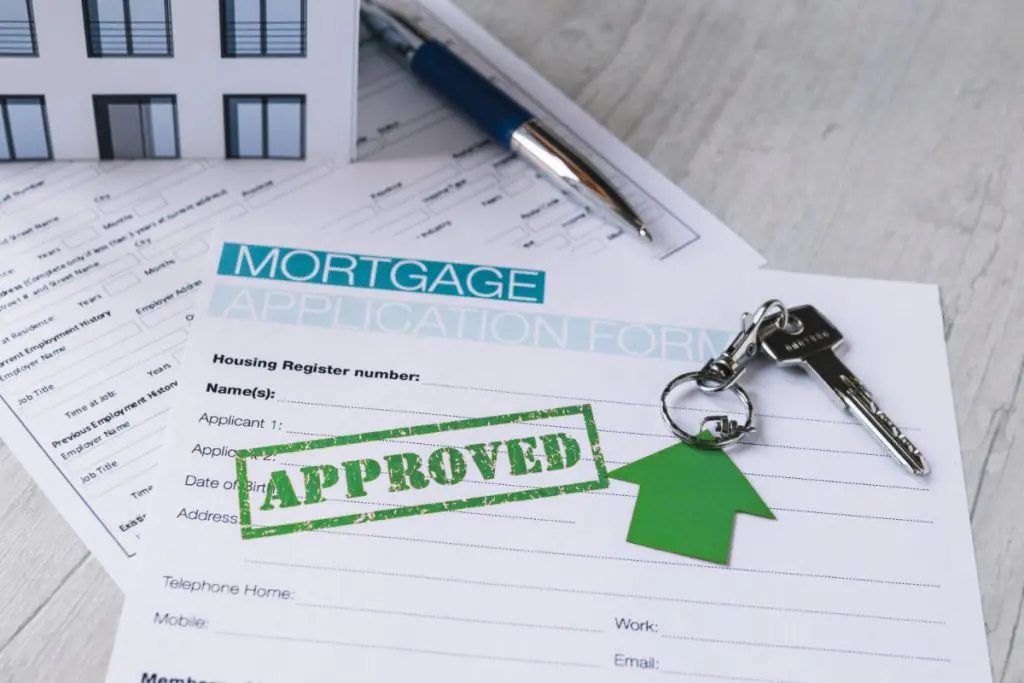
An illustrative mortgage form with an APPROVED stamp. A real application requires the lender’s assessment.
Compare products that are available and suitable for your circumstances. Look beyond the initial interest rate: consider the type and length of the deal, product and advice fees, the mortgage term, monthly payments and early repayment charges. Your plans to move or repay early can affect which features matter most.
If you use an adviser, ask which lenders and products their service covers, what they recommend and why, and what fees you will pay. A recommendation is not a promise of the cheapest mortgage or an offer from the lender.
Once you have chosen a product and property, submit the full application with the required evidence, directly or through your adviser. The lender decides whether to issue a formal mortgage offer. Appoint your solicitor or conveyancer early and agree when to begin paid work; the mortgage application and legal checks can run alongside each other.
5. Complete the legal checks, valuation and survey
Conveyancing is the legal work involved in transferring a property. Your solicitor or conveyancer checks the title and tenure, arranges relevant searches, raises enquiries and explains rights, restrictions and contractual obligations. For a leasehold purchase, this includes the lease terms and relevant charges. These documentary checks do not inspect the building or confirm that its wiring, plumbing or structure is sound. GOV.UK’s home-buying guide explains searches, enquiries and surveys for England and Wales.
The lender’s valuation assesses whether the property is acceptable security for the loan. It is not your condition survey. If the valuation is below the agreed price, the available loan may leave a funding gap. Discuss renegotiating the price, whether additional funds are affordable, other lending options or not proceeding before you become bound. A shortfall can be substantial.
A buyer’s survey examines the property’s condition within the agreed inspection scope. Choose a qualified surveyor and a survey level suited to the home’s age, construction and condition. RICS explains the different survey levels. A survey can identify defects and the need for repairs or specialist investigation; it cannot guarantee a defect-free home. Use the findings to assess repair costs and discuss any concerns before committing. In Scotland, start with the Home Report reviewed before your offer and consider any further checks it recommends.
The lender issues a mortgage offer only after its assessment and subject to its conditions. A satisfactory survey alone does not secure that offer. Review its terms and expiry date with your adviser or lender, and ensure your solicitor has the information needed before you commit.
Allow time for searches, enquiries, mortgage checks and any further investigations. A chain, missing documents or unresolved title and lease issues can extend the process. Ask your solicitor for an estimate for your purchase and updates as the checks progress.
6. Confirm insurance and the binding commitment
In England and Wales, exchange of contracts makes the purchase legally binding. The Northern Ireland buying guide also identifies exchange as the binding point. In Scotland, the equivalent commitment arises when missives are concluded. Withdrawing after the applicable binding point can mean losing money or owing compensation.
Before authorising that commitment, confirm with your solicitor that finance is in place, legal and survey issues have been addressed, and you understand the contract, deposit arrangements and agreed completion date. Do not treat an AIP as confirmed funding.
Arrange buildings cover to start when your contract and lender require it, commonly from exchange in England and Wales. Your conveyancer should confirm the date; in Scotland, check the missives with your solicitor. MoneyHelper’s exchange checklist includes arranging cover for the exchange date.
For a leasehold flat, check whether a freeholder or management company arranges a block policy and whether it meets the lender’s requirements. MoneyHelper’s buildings insurance guide explains common leasehold arrangements. Buildings insurance covers the structure; contents insurance covers belongings and is optional. Premiums, excesses and exclusions vary, so compare the cover as well as the price. Our home insurance guide explains these options.
7. Complete the purchase and collect the keys

Keys being handed over at the end of a property purchase.
Completion is the stage when the remaining purchase funds are transferred to the seller’s solicitor and the legal transfer of ownership is completed. Your solicitor coordinates the funds, including the mortgage advance. Once completion is confirmed, the seller or estate agent can release the keys according to the agreed arrangements. In Scotland, this stage is commonly called settlement.
Your solicitor or conveyancer then handles the applicable property tax return and payment, where required, and registration with the relevant land registry. Ask them to confirm what remains outstanding and keep the completion documents safely.
For help planning your mortgage, arrange a free initial consultation with Extend Finance. We will explain our service and any fees for further work before you proceed.
FAQ
Frequently asked questions
What is the first step when buying a property in the UK?
Work out a realistic budget from your savings, income, spending and debts. Include buying costs and ongoing bills as well as the deposit. You can speak to a lender directly or use a mortgage adviser to explore your options.
What documents do I need for a mortgage application?
You will usually need identity and address evidence, bank statements, income documents and proof of your deposit and its source. If you are self-employed, the lender may request business accounts, SA302 tax calculations and tax year overviews. The required documents and periods vary by lender and circumstances; a gifted deposit can require additional evidence.
Does an Agreement in Principle guarantee a mortgage?
No. It is a preliminary indication of what a lender might lend. A formal offer depends on full underwriting, your evidence, the property valuation and lender criteria. Ask whether the AIP involves a soft or hard credit search before applying.
When do I need buildings insurance?
Cover must start when your contract and lender require it, commonly at exchange in England and Wales. In Scotland, the missives determine the contractual position. Ask your conveyancer to confirm the date for your purchase and whether a leasehold block policy already provides the required cover. Contents cover is optional.
How long does buying a house in the UK take?
An ordinary purchase can take several months, but there is no fixed UK-wide timetable. Mortgage checks, searches, survey findings, legal enquiries and a chain can all affect progress. Your solicitor can explain the likely sequence for the relevant legal system and the agreed interval between binding commitment and completion. Auctions and other special arrangements may have different deadlines.