TL;DR
In short
- A debt consolidation loan is new credit that you use to pay off your existing debts in full, leaving you with one loan to repay.
- A consolidation loan can lower your monthly payments, but a longer term can increase the total interest you pay, and a loan secured on your home puts your home at risk of repossession if you cannot keep up repayments.
- Before you consolidate, compare the total cost, including interest and fees over the whole term, with what you pay now, and check that you can afford the repayments.
- An IVA is a formal insolvency procedure set up through an insolvency practitioner. It usually lasts five or six years, usually involves fees and affects your credit file.
- An IVA cannot be set up in Scotland, where a similar formal arrangement is a protected trust deed.
Some of our clients are struggling with debt. Although our speciality is mortgages, we decided to give you some tips on consolidation in the UK, with a particular focus on IVA, or Individual Voluntary Arrangement. If you are planning to buy a property but are struggling with debt, you will find this article very useful.

What is debt consolidation in the UK?
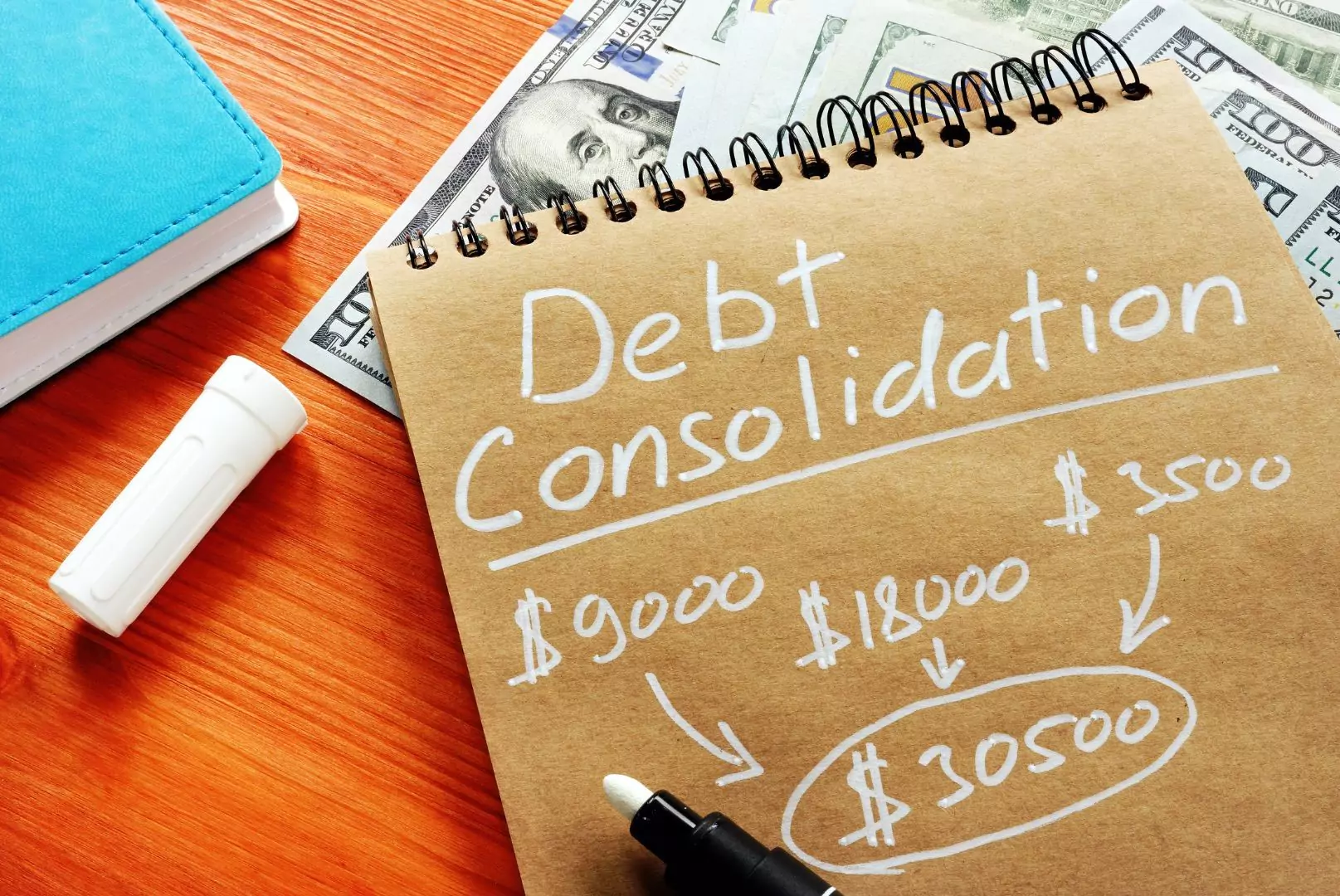
In the simplest terms, debt consolidation is merging several liabilities into one. With this solution, you pay off all your loans with a single instalment. A consolidation loan can lower your monthly payments, but it may take longer to pay back. Consolidation is advantageous in that, in the event of any further problems, you negotiate with one instead of several creditors.
You can benefit from such a loan if:
-
you have credit card debt
-
you have several cash loans
-
you have a few short-term loans to pay back
-
you are in overdraft
Consolidation loans themselves are divided into:
-
secured, for example on your home
-
unsecured
These basic facts should suffice for now. If you want to learn more about the pros and cons of a consolidation loan, we encourage you to read the Money Helper article.
How does a debt consolidation loan work?
A debt consolidation loan is new credit that you use to pay off your existing debts in full, leaving you with one loan to repay (source: National Debtline: debt consolidation).
With consolidation, you repay your debt with a single monthly payment. However, a consolidation loan may have a longer term, which can lower monthly payments but increase the total interest you pay, so debt consolidation can be a more expensive option in the longer term. Consolidating your loans may also involve paying fees to your lenders. In addition, late or incomplete payments will affect your credit score, and some lenders will only offer a consolidation loan secured on your home, which puts your home at risk of repossession if you cannot keep up repayments. Source: Money supermarket.
When does consolidation make sense and when does it not?
While consolidation is a good step towards financial freedom, it is not always worth choosing it. According to Money Helper, consolidation is wise to consider when:
-
Savings from a consolidation loan will be higher than any fees and charges
-
You are able to pay the instalments on the new loan
-
You want to reduce your expenditure in order to repay your debt
-
The total interest rate on the consolidation loan (APR) will be lower than before
-
IVA is not possible in your case or you do not want to use it
Consolidation makes no sense if:
-
You cannot afford to pay the new instalments
-
A consolidation loan will not help you pay off all your current debts
-
Consolidation loan costs will exceed savings
What instead of consolidation?
Before you consolidate, compare the total cost of the new loan, including interest and fees over the whole term, with what you pay now, and check that you can afford the repayments. If you cannot keep up with your debt repayments, free, impartial debt advice from organisations such as StepChange or National Debtline can explain your options, which may include an IVA (Individual Voluntary Arrangement). MoneyHelper also has information about free debt advice services.
Individual Voluntary Arrangement
An IVA is a voluntary agreement between a debtor and creditors. It can be entered into in England, Northern Ireland and Wales (source: Stepchange). An IVA is used to pay debts such as:
-
overdraft,
-
cash loans,
-
catalogue debts,
-
consumer loans paid in instalments,
-
debts on a credit card or shop card,
-
tax arrears to HMRC
Source: Money Helper
An IVA is a formal insolvency procedure set up through an insolvency practitioner. It only goes ahead if creditors owed at least 75% of the debt (by value, among those who vote) agree to it. An IVA is listed on the Individual Insolvency Register and affects your credit file, which can make borrowing, including getting a mortgage, harder. If you do not keep up the payments, the insolvency practitioner or your creditors can apply to make you bankrupt (source: GOV.UK: individual voluntary arrangements).
Before the arrangement is agreed, your finances will be checked and you will be asked questions to work out what you can afford to repay. An IVA usually involves fees: a set-up fee and a handling fee each time you make a payment.
If you need specialist help with debt consolidation using a UK mortgage, then I would encourage you to use our UK mortgage adviser - Extend Finance! We can advise you on choosing the right bank, advise you on the best solution and show you what to look out for when consolidating debts in the UK.
What if I live in Scotland?
An IVA cannot be set up in Scotland. In Scotland, a similar formal arrangement is a protected trust deed (source: mygov.scot: what is a trust deed). The conditions for a trust deed include:
- You live in Scotland
- You have debts of £5,000 or more
- You do not rely on benefits as your only income
The full list of conditions is on the mygov.scot page on who can get a trust deed.
With a trust deed, your trustee deals with your creditors and works out a new monthly payment for you.
Key features of a protected trust deed:
- Once a trust deed is protected, creditors cannot chase you for payment, add interest or charges, or take court action for the debts it covers
- If the trust deed is protected and you keep to its terms, remaining debts it covers are written off at the end
Summary
-
Debt consolidation in the UK is the ability to pay off several debts by combining several instalments into one. You can combine debts from bank loans, credit cards, mortgages, unpaid bills.
-
A debt consolidation loan is new credit that you use to pay off your existing debts in full, leaving you with one loan to repay.
-
Before you consolidate, compare the total cost, including interest and fees over the whole term, with what you pay now, and check that you can afford the repayments.
-
An IVA (Individual Voluntary Arrangement) combines several debts into a single monthly payment based on what you can afford. Once the IVA is approved, interest and charges on the debts it includes stop. An IVA usually lasts five or six years, and its length and monthly payment are set out in the proposal based on what you can afford.
FAQ
Frequently asked questions
How does a debt consolidation loan work?
A debt consolidation loan is new credit that you use to pay off your existing debts in full, leaving you with one loan to repay. Some lenders will only offer a consolidation loan secured on your home, which puts your home at risk of repossession if you cannot keep up repayments.
Is a debt consolidation loan always cheaper?
No. A consolidation loan can lower your monthly payments, but a longer term can increase the total interest you pay. Before you consolidate, compare the total cost, including interest and fees over the whole term, with what you pay now, and check that you can afford the repayments.
How long does an IVA usually last?
An IVA usually lasts five or six years. Its length and your single monthly payment are set out in the proposal based on what you can afford, and interest and charges on the debts it includes stop once the IVA is approved.
Can an IVA affect getting a mortgage?
Yes. An IVA is a formal insolvency procedure. It is listed on the Individual Insolvency Register and affects your credit file, which can make borrowing, including getting a mortgage, harder.
Can I get an IVA in Scotland?
No. An IVA cannot be set up in Scotland. In Scotland, a similar formal arrangement is a protected trust deed. If the trust deed is protected and you keep to its terms, remaining debts it covers are written off at the end.